Publications
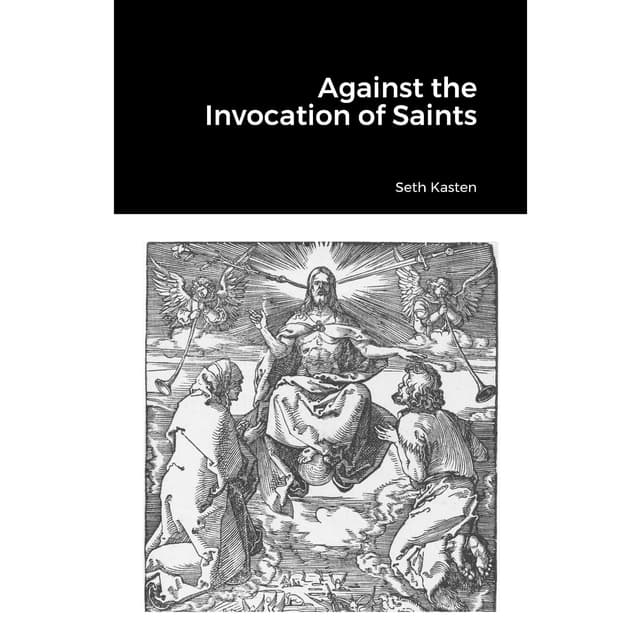
Against the Invocation of Saints
It has not gone unnoticed by many of our clergy in the Missouri Synod that the draw to “go East” has remained steady since the late 20th century. The need for material answering EO theology should be apparent. We have many Lutheran sources addressing the Roman Catholic Church, Reformed theology, various small sects of the past, and Evangelicalism, but we have little addressing the EO. This work focuses on supporting the Lutheran doctrine that prayer may be directed only to God and answering EO objections, exhaustively covering the arguments of both the past and present. While coming from a specifically Lutheran perspective, the defense should seem fitting to almost all Protestants.
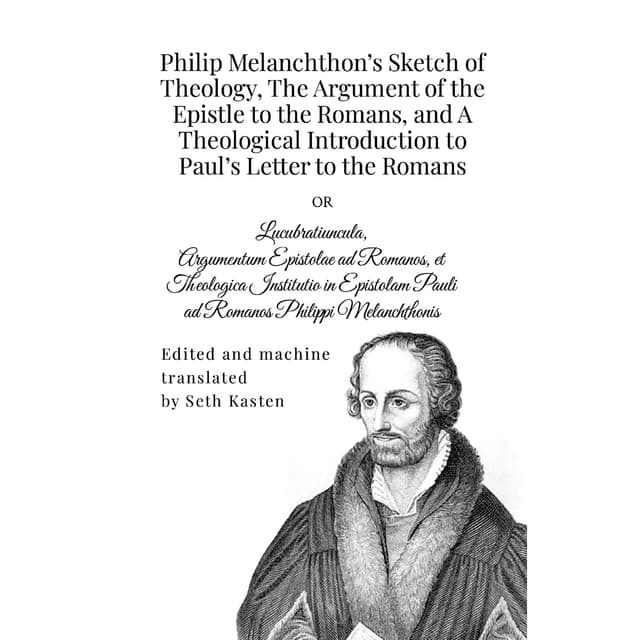
Philip Melanchthon’s Sketch of Theology, The Argument of the Epistle to the Romans, and A Theological Introduction to Paul’s Letter to the Romans
Philip Melanchthon’s early foundational works on Pauline theology—long available only in Latin—now appear in English for the first time in this volume edited by Seth Kasten. Drawing on Corpus Reformatorum XXI (cols. 1–59), it brings together: 1. Lucubratiuncula (“Sketch of Theology”), Melanchthon’s earliest outline of his loci communes, here revealed as a working draft rediscovered in a Gotha manuscript 2. Argumentum Epistolae ad Romanos, the concise topical guide affixed to his 1519 Introduction to Romans 3. Theologica Institutio in Epistolam Pauli ad Romanos, Melanchthon’s first systematic introduction to Paul’s Epistle, also unpublished in English until now Alongside these texts, Kasten's preface and Bindseil's original introduction and annotations reconstruct the remarkable trajectory of Melanchthon’s Romans lectures (1519–1522) and the subsequent evolution of his Loci Communes (1521, 1535, 1543, 1555). Machine-assisted translation by ChatGPT 4o, with manual review, retains fidelity to the Latin original. Scholars and students alike will welcome this volume’s primary sources and historical context, tracing the development of the early sketch to the 1521 Commonplaces that Luther hailed as “invincible” and “canonical.”
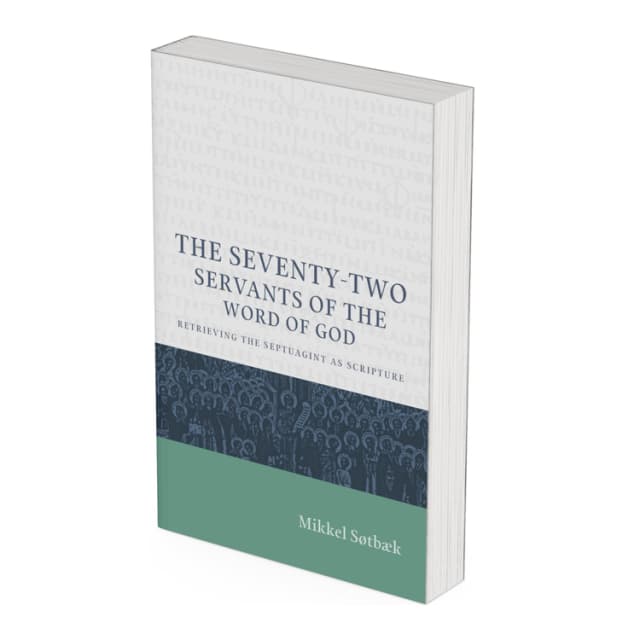
The Seventy-Two Servants of the Word of God: Retrieving the Septuagint as Scripture
This book traces the dramatic history of the Old Testament—from its origins in ancient Temple scrolls during the reign of the kings of Jerusalem, to the profound moment when Jesus himself read from the Prophet Isaiah in the Synagogue of Nazareth. By examining the roots of the Old Testament as used and read by Jesus and the apostles this book argues that the edition known as the Greek Septuagint provides a more accurate and faithful witness to the original Hebrew manuscripts of the Old Testament, reflecting the received and preserved texts as found in the Temple of Jerusalem in third century B.C. This book challenges the common view of the later Hebrew Masoretic Text being the authentic and genuine textual basis for the Old Testament. Yet the conclusions presented are not novel but rather reflects the consensus of early Judaism and the early Christian church of the first 400 years, a view not entirely forgotten at the time of the Reformation among Protestants and Roman Catholics. Making usage of the most recent research and scholarship in textual criticism and Old Testament studies this early view of the importance of the Septuagint has increasingly become vindicated by new discoveries of ancient manuscripts helping us to more easily discern the Old Testament as it is written.